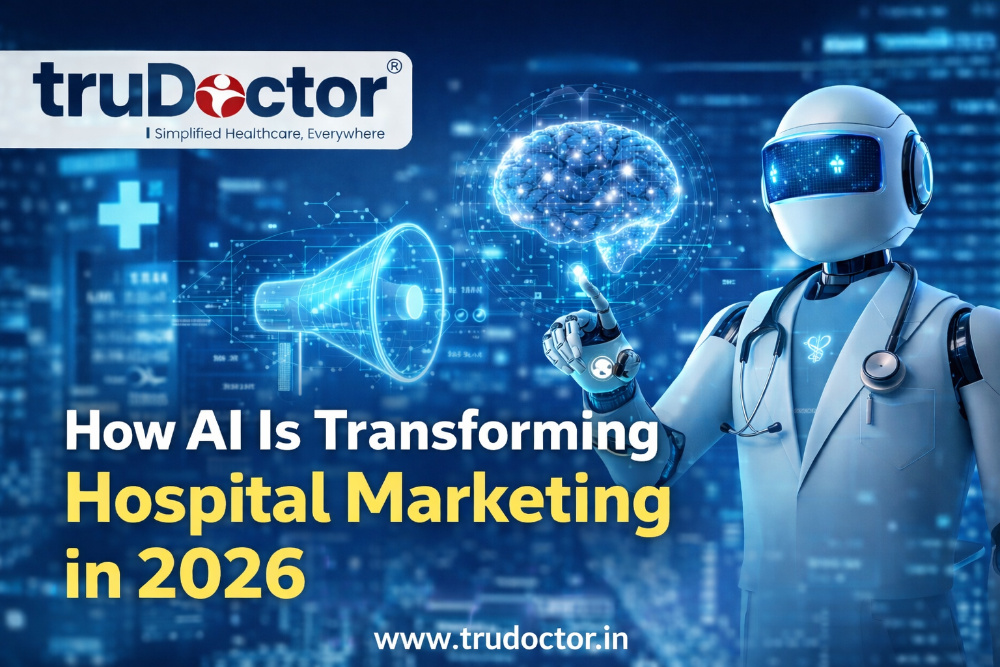
Today, most patients go online before choosing a hospital. They read reviews, compare treatments, and search for the best options near them. That’s why How AI Is Transforming Hospital Marketing in 2026 has become such an important topic. Hospitals are no longer depending only on traditional ads or word of mouth. They are using Artificial Intelligence (AI) to understand patient needs, send personalized messages, and improve their online presence.
In this blog, you will learn how AI is changing hospital marketing step by step—from smart chatbots and predictive analytics to AI-powered SEO and targeted campaigns. If you are a hospital owner or healthcare marketer, this guide will help you attract more patients, build trust, and grow your brand in 2026.
1. What is AI in hospital marketing?
AI in hospital marketing means using artificial intelligence tools and technologies to improve how hospitals attract, engage, and retain patients online. Instead of relying only on manual marketing efforts, AI helps hospitals analyze large amounts of data, understand patient behavior, and make smart marketing decisions automatically. This is one of the biggest reasons why How AI Is Transforming Hospital Marketing in 2026 has become a major trend in healthcare digital marketing.
How AI Is Different from Traditional Hospital Marketing
Traditional marketing depends on guesswork and fixed campaigns. For example, hospitals might run the same advertisement for everyone, without knowing who is actually interested.
AI-driven hospital marketing, on the other hand:
- Analyzes patient data in real time
- Predicts patient needs using predictive analytics
- Personalizes content and offers
- Automates follow-ups and communication
- Improves campaign performance through continuous learning
Why AI Matters for Hospitals in 2026
Today’s patients expect quick answers, personalized communication, and easy online booking. AI helps hospitals meet these expectations by:
- Improving patient engagement through smart chatbots
- Enhancing local SEO visibility
- Optimizing digital advertising campaigns
- Tracking marketing performance with AI-powered analytics
2. AI-Driven Personalization & Hyper-Targeting
One of the key ways How AI is transforming Hospital Marketing in 2026 is through super-smart personalisation. Nowadays, patients just expect hospitals to get what they’re on about. AI in healthcare marketing lets hospitals send the right message to the right person at the very moment they need to hear it. Rather than just firing off the same old ad to everyone, AI looks at what patients are doing online, what they’ve searched for, where they live, and what they’re interested in so it can serve up super-personalized comms.
Take someone who’s just searched for “knee replacement treatment” – AI can show them some blog posts about that, or profiles of the right docs, patient testimonials, or even options to book an appointment. And this kind of AI-fuelled personalisation in hospital marketing really can boost patient engagement and bring in more results.
What’s Personalisation in Hospital Marketing All About?
Personalisation means tailoring the content, ads, emails and website experience to what patients are like. With the help of AI-powered hospital marketing tools, hospitals can:
- Suggest relevant treatments based on what patients have been browsing
- Send follow-up emails to remind them of check-ups
- Display special offers or services based on where patients live
- Suggest doctors based on what they’re actually looking for
How AI Powers Hyper-Targeting
Hyper-targeting is where things get really clever. AI uses its predictive bit (analytics and machine learning) to identify super-specific groups of people. So instead of targeting “all adults”, hospitals can target:
- Women aged 30-45 who are after maternity services
- Older folks looking for cardiac care
- Parents on the hunt for a good kids’ specialist
- People in the area are searching for emergency services
Getting Personal for Better Results in Your Area
For hospitals, combining a good spot in the local search results with AI-fuelled targeting can be a game-changer. AI tools look at what people are searching for online, who they are and what their local competition is up to. That lets hospitals:
- Get a higher spot in the rankings for searches like “hospital near me”
- Run Google Ads that target people in the local area
- Create content that addresses the local health issues that matter
- Make sure their services are just what people are looking for when they use voice search
3. Conversational AI & Chatbots for Patient Engagement
One of the biggest ways How AI Is Transforming Hospital Marketing in 2026 is through conversational AI and smart chatbots. Today’s patients expect quick answers. They do not want to wait on hold or search through long web pages. AI chatbots help hospitals respond instantly, guide patients, and improve overall patient engagement—all without increasing staff workload.
What Is Conversational AI in Healthcare?
Conversational AI uses technologies like Natural Language Processing (NLP) and machine learning to understand patient questions and respond in a human-like way. Unlike basic auto-replies, AI-powered chatbots can:
- Answer common medical and service-related questions
- Help patients book appointments online
- Share doctor availability and department details
- Provide pre-visit instructions
- Collect patient information for follow-up
How AI Chatbots Improve Hospital Marketing
AI chatbots are not just support tools—they are powerful hospital marketing tools. Here’s how they help:
- 24/7 Patient Support: Patients can ask questions anytime, even after working hours.
- Higher Conversion Rates: Instant replies increase the chances of appointment bookings.
- Better Lead Capture: Chatbots collect patient details for follow-up campaigns.
- Improved Patient Experience: Fast and helpful responses build trust.
- Reduced Administrative Burden: Staff can focus on critical tasks while AI handles routine queries.
Best Practices for Implementing AI Chatbots in Hospitals
To get the best results from AI hospital marketing strategies, hospitals should:
- Keep chatbot answers simple and clear.
- Add an option to connect with a real staff member when needed.
- Ensure patient data privacy and follow healthcare data regulations.
- Regularly update chatbot responses based on patient behavior.
- Integrate chatbots with CRM and marketing automation systems.
4. AI-Powered Analytics & Predictive Insights
One of the biggest reasons How AI Is Transforming Hospital Marketing in 2026 is gaining attention is because of AI-powered analytics. In simple words, AI can study large amounts of patient data and turn it into useful insights. Instead of guessing what patients want, hospitals can now use real data to make smart marketing decisions. This is a major shift in AI in healthcare marketing, where decisions are based on patterns, not assumptions.
What Are Predictive Analytics in Hospital Marketing?
Predictive analytics means using AI to study past data and predict future behavior. For example, AI can:
- Identify which services are searched the most
- Predict peak appointment seasons
- Detect which campaigns are likely to bring more patient inquiries
- Analyze patient demographics and interests
How AI Analytics Improves Patient Acquisition
AI-driven tools track website visits, ad clicks, call inquiries, and appointment bookings in real time. This helps hospitals understand:
- Where their patients are coming from
- Which marketing channels give the best results
- What type of content builds the most trust
Smart Dashboards & Real-Time Decision Making
Modern AI dashboards provide clear visual reports that even non-technical teams can understand. Marketing managers can see:
- Conversion rates
- Cost per lead
- Patient engagement levels
- Campaign performance comparisons
5. Automated Marketing Workflows & Campaign Optimization
One of the biggest reasons How AI Is Transforming Hospital Marketing in 2026 is gaining attention is because of automated marketing workflows. Earlier, hospital marketing teams had to manually send emails, follow up with leads, and manage campaigns. Today, AI in healthcare marketing can automate these tasks, save time, and improve results.
AI-powered automation allows hospitals to connect with the right patient at the right time with the right message. This improves patient engagement, increases appointment bookings, and reduces marketing costs.
1. Marketing Automation 2.0 with AI
AI takes traditional automation to the next level. Instead of sending the same message to everyone, AI studies patient behavior — such as website visits, service searches, and inquiry forms — and then creates personalized follow-ups.
For example:
- If a patient searches for knee replacement, AI can automatically send related blog articles or doctor details.
- If someone abandons an appointment form, AI can trigger a reminder email or SMS.
- AI tools can schedule social media posts at the best time for higher engagement.
2. Smart Workflow Optimization
AI does more than automate — it optimizes. With predictive analytics for hospitals, AI can:
- Score leads based on their chances of booking an appointment
- Identify which campaigns are performing best
- Suggest changes in ad targeting or messaging
- Reduce ad spend on low-performing channels
3. AI in Advertising & Campaign Performance
AI also plays a major role in paid advertising and campaign optimization. It can automatically:
- Adjust ad budgets based on performance
- Target specific patient demographics
- Run hyper-local campaigns
- Optimize keywords for healthcare SEO trends in 2026
Why Automated AI Workflows Matter for Hospitals
In simple terms, AI-powered workflows help hospitals:
- Save time and staff effort
- Increase patient acquisition
- Improve patient communication
- Make data-driven marketing decisions
- Scale campaigns without increasing costs
6. Ethical Considerations & Patient Privacy
As we discuss how AI is transforming hospital marketing in 2026, one important question arises: Is AI safe and ethical in healthcare marketing? While AI in healthcare marketing offers powerful tools like personalisation, predictive analytics, and marketing automation, hospitals must use it responsibly. Patient trust is the foundation of healthcare, and without proper privacy protection, even the best AI strategies can fail.
1. Protecting Patient Data and Privacy
Hospitals collect sensitive data such as medical history, contact details, and appointment records. When using AI-driven marketing tools, this data must be protected. Hospitals should:
- Follow healthcare data protection laws (such as HIPAA or local data regulations).
- Use secure, encrypted systems for storing patient information.
- Limit data access to authorized staff only.
- Clearly inform patients about how their data is being used.
2. Ethical Use of AI in Hospital Marketing
AI-powered hospital marketing should never mislead patients. For example:
- Avoid exaggerated claims in AI-generated content.
- Ensure chatbots provide accurate and verified information.
- Clearly state when a patient is interacting with an AI system.
- Avoid biased targeting that excludes certain patient groups.
3. Balancing Automation with Human Oversight
Hospital marketing automation can save time and improve efficiency, but human supervision is still essential. AI tools can analyze data and suggest strategies, but final decisions should involve healthcare professionals. This balance ensures that campaigns remain accurate, ethical, and patient-focused.
Also Read: https://trudoctor.in/7-local-seo-hacks-for-hospitals-in-varanasi/
Conclusion
As we have seen, How AI Is Transforming Hospital Marketing in 2026 is not just a trend—it is a major shift in the healthcare industry. From AI-driven personalization and chatbots to predictive analytics and hospital marketing automation, artificial intelligence is helping hospitals attract more patients and improve engagement. AI in healthcare marketing allows hospitals to deliver the right message to the right patient at the right time. At the same time, maintaining ethical standards and patient privacy is essential for long-term trust. Hospitals that combine AI-powered SEO, data-driven strategies, and responsible practices will stay ahead of the competition. In 2026, smart hospitals are not just providing better care—they are also using AI to build stronger digital connections with patients.
Frequently Asked Questions
1. How is AI transforming hospital marketing in 2026?
AI is transforming hospital marketing in 2026 by using data and automation to improve patient targeting, personalization, and campaign performance. Hospitals now use AI-powered tools for chatbots, predictive analytics, SEO optimization, and marketing automation. This helps them attract more patients, improve engagement, and increase return on investment.
2. What are the main benefits of AI in healthcare marketing?
The main benefits of AI in healthcare marketing include better patient personalization, faster response times, improved lead generation, and smarter decision-making through data analysis. AI-driven hospital marketing also reduces manual work and improves campaign efficiency, making marketing efforts more cost-effective.
3. Can AI help hospitals get more patients?
Yes, AI helps hospitals get more patients by improving online visibility, optimizing healthcare SEO, and running targeted digital campaigns. AI analyses patient behaviour and search trends, enabling hospitals to create content and ads that match what patients are actively looking for.
4. Is AI safe to use in hospital marketing?
AI is safe to use in hospital marketing when proper data protection and ethical guidelines are followed. Hospitals must protect patient information, use secure systems, and ensure transparency in AI-driven communication. Responsible AI use builds trust and strengthens patient relationships.
5. What AI tools are commonly used in hospital marketing?
Common AI tools used in hospital marketing include chatbots for patient support, predictive analytics software, AI-powered SEO tools, automated email marketing systems, and programmatic advertising platforms. These tools help hospitals improve patient engagement and overall marketing performance.